
About Portuguese Escudos Exchange
The Portuguese Escudo (PTE) was the official currency of Portugal from 1911 until it was replaced by the Euro in 2002. The name “escudo” is derived from the Portuguese word for “shield,” reflecting the historical significance of Portugal’s coat of arms. The Escudo replaced the Portuguese real at a rate of 1,000 réis to 1 escudo, as part of the country’s efforts to modernise its economy in the early 20th century.
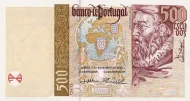
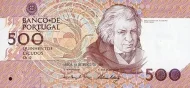
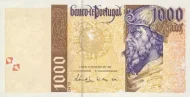
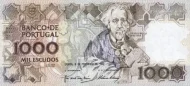
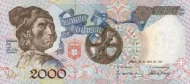
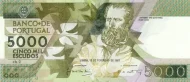
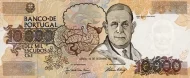
The Portuguese Escudo was subdivided into 100 centavos, and the currency was issued in both coins and banknotes. Coins were available in denominations ranging from 1 centavo to 200 escudos, while banknotes were issued in denominations of 500, 1,000, 2,000, 5,000, and 10,000 escudos. The designs on Portuguese Escudo banknotes featured important
national figures and landmarks, including portraits of famous Portuguese explorers such as Vasco da Gama and depictions of historic sites like the Jerónimos Monastery.
Portugal’s economy during the period of the Escudo was based largely on agriculture, fishing, and manufacturing. The stability of the Escudo was essential for supporting
the country’s trade relationships, particularly with its European neighbours and former colonies in Africa and South America. The Escudo played a crucial role in facilitating
international trade and investment during a time of significant economic and political change in Portugal.
The Banco de Portugal (Bank of Portugal) was responsible for issuing the Portuguese Escudo and managing the country’s monetary policy. The central bank’s primary objectives were to maintain price stability and control inflation, which was particularly important during periods of political and economic instability in the mid-20th century. The Escudo was a relatively stable currency until the transition to the Euro, which was introduced as part of Portugal’s integration into the European Union.
One of the unique aspects of the Portuguese Escudo was its long-standing use in the Portuguese colonies, including Angola, Mozambique, and Cape Verde, where variants of the Escudo were in circulation. The currency’s legacy is also reflected in the continued use of the term “escudo” in Cape Verde, where it remains the official currency.
In conclusion, the Portuguese Escudo was the official currency of Portugal for over 90 years and played a vital role in the country’s economic development. It was replaced by the Euro in 2002, but the Escudo remains a symbol of Portugal’s financial history and its connections to its colonial past.