
About Belarusian Rubles Exchange
The Belarusian Ruble (BYN) is the official currency of Belarus, a country in Eastern Europe that has experienced significant economic changes over the past few decades. The ruble has a complex history, reflecting the country’s transition from the Soviet Union to an independent nation. The first Belarusian Ruble was introduced in 1992, following the dissolution of the Soviet Union, replacing the Soviet ruble.
The ruble has been revalued multiple times in response to economic challenges, including high inflation and periods of economic instability. The most recent revaluation occurred in 2016, when the new Belarusian Ruble (BYN) replaced the previous version (BYR) at a rate of 10,000 BYR to 1 BYN. This redenomination was part of broader economic reforms aimed at stabilizing the currency and addressing inflationary pressures that had plagued the country for years.
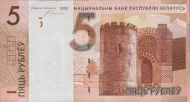
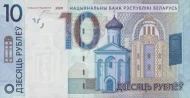
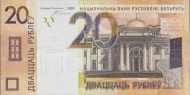
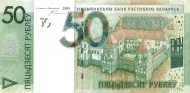
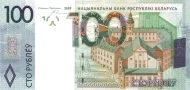
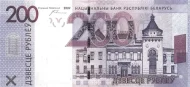
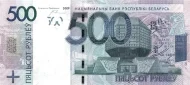
The Belarusian Ruble is subdivided into 100 kopecks, and Belarus issues both coins and banknotes. Coins are available in denominations ranging from 1 to 50 kopecks, while ruble banknotes are issued in denominations of 5 to 500 rubles. The designs of Belarusian banknotes feature historical and cultural landmarks, reflecting the country’s rich heritage and national pride. Notably, the introduction of coins in 2016 marked the first time in Belarusian history that kopeck coins were issued, as previous iterat…
Belarus is a small, open economy that is heavily reliant on trade with neighboring countries, particularly Russia, which is Belarus’s largest trading partner. A mix of state-controlled industries and private enterprises characterises the Belarusian economy. The value of the Belarusian Ruble is closely tied to the country’s economic performance and its relationships with foreign trade partners, particularly Russia and the European Union.
The Central Bank of Belarus is responsible for issuing the ruble and managing the country’s monetary policy. Over the years, the central bank has implemented a number of measures aimed at stabilising the currency and controlling inflation. While Belarus has faced economic hardship, including international sanctions and political unrest, the ruble remains a key part of the country’s financial system.
One of the challenges faced by the Belarusian Ruble is its relatively low value compared to other major currencies, such as the U.S. dollar or the Euro. This has led to a reliance on foreign currencies for some transactions, particularly in international trade. However, the government of Belarus has made efforts to increase confidence in the ruble by implementing monetary reforms and maintaining foreign currency reserves.
In recent years, Belarus has worked to diversify its economy by developing sectors such as IT, agriculture, and manufacturing. These efforts aim to reduce the country’s reliance on traditional industries and strengthen the stability of the ruble. Despite these challenges, the Belarusian Ruble remains an important symbol of Belarus’s national identity and economic sovereignty.
In conclusion, the Belarusian Ruble has evolved significantly since its introduction in 1992. While it has faced economic difficulties, it remains a key part of Belarus’s financial system and a representation of the country’s independence and resilience.