
About Austrian Schilling Exchange
The Austrian Schilling (ATS) was the official currency of Austria from 1924 until it was replaced by the Euro in 2002. The Schilling was introduced in response to the hyperinflation that followed the collapse of the Austro-Hungarian Empire and the devaluation of the Austrian crown, its predecessor currency. The Schilling quickly became a symbol of Austria’s economic recovery and stability.
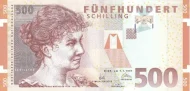
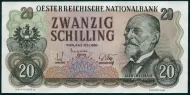
The Schilling was subdivided into 100 groschen, and Austria issued both coins and banknotes in various denominations. Coins were available in values ranging from 1 groschen to 50 schilling, while banknotes ranged from 20 to 1,000 schilling. The designs of Austrian Schilling banknotes were known for their artistic beauty and often featured prominent figures from Austrian history, including composers like Wolfgang Amadeus Mozart and scientists like Sigmund Freud.
During its lifespan, the Schilling underwent several changes. It was initially pegged to the U.S. dollar, but following World War II, Austria’s economy was heavily impacted by the global economic situation, leading to inflationary pressures. In 1945, after the defeat of Nazi Germany and the end of the war, Austria reintroduced the Schilling, replacing the Reichsmark, which had been imposed during the German annexation of Austria.
By the 1950s, Austria’s economy had stabilised, and the Schilling became one of the most stable currencies in Europe. This period of economic growth, often referred to as the “Austrian economic miracle,” was largely credited to sound fiscal policies, which included strong banking regulations and low levels of government debt. The stability of the Austrian Schilling contributed to the country’s economic success during the latter half of the 20th century.
Austria’s decision to join the European Union in 1995 set the stage for the eventual adoption of the Euro. On January 1, 1999, the Euro was introduced as a virtual currency in Austria for electronic payments, while the Schilling continued to circulate as legal tender until 2002. On January 1, 2002, the Euro fully replaced the Schilling, and Austria officially joined the Eurozone.
Although the Schilling has been out of circulation for more than two decades, it remains a nostalgic symbol for many Austrians, who view it as a representation of Austria’s post-war recovery and economic strength. Some old Schilling notes and coins still have collector value, and they can be exchanged for Euros at the Austrian National Bank indefinitely.
The Schilling’s legacy lives on as part of Austria’s rich financial history, and it continues to be remembered fondly as a stable and reliable currency during a period of significant change in Europe.